Nanonets Agent:Reconciliation
AI-native agents for
reconciliation
Pulls every bank, processor, and ledger feed, matches the lines against your own tolerances and rate cards, clears what agrees, and hands you only the differences that need a decision.
 Nanonets
Reconciliation Agent
Online
Today · 2,417 lines
31 with humans
- 08:05Pulled 2,417 statement lines from HSBC and StripeIngested
- 08:072,291 lines matched one-to-one against the ledgerMatched
- 08:08Payout PAY-88214 split across 34 open invoicesGrouped
- 08:10Cleared $12,480 FX timing difference · EUR accountCleared
- 08:14STMT-4409 · $1,240 ACH credit with no ledger entry — asked R. Iyer on SlackHeld
- 08:19R. Iyer confirmed a carrier rebate — coded and clearedApproved
- nowReconciling SET-70318 · Adyen settlement, 612 linesMatching
Used by 35% of the Fortune 500 and 10,000+ enterprises


















Reconciliation teams using Nanonets see
Your close policy, as the agent's rulebook
Nanonets turns the documents your controllers already maintain into a governed context graph — every matching rule explicit, every rule traced to the clause it came from.
reconciliation-policy.pdfReconciliation & Close Policy
Revision 9 · Controller approved
3.1 Match tolerance
A statement line clears against a ledger entry where the amounts agree within 0.5% or $25, whichever is lower, and the dates fall inside a three-day settlement window.
3.4 Unexplained differences
Any residual above $1,000 blocks period sign-off and routes to the account owner.
It gets better at your accounts every week
Unmatched lines are not failures — they are the training. Every answer your team gives is captured, so the agent clears more of the book on its own.
NanonetsHelp agents solve the most complex problems with context graphs.
A processor payout has settled $4,180 short of the invoices it covers, with fees and a chargeback netted off inside the batch, two days after the period closed, and the carrier is still disputing part of it — which period does the difference belong in?
One payout. Five kinds of context, each in a different system — the ledger doesn’t know the fee split, and the processor doesn’t know your close calendar.
How the Context Graph works →Ledger & open invoices
System-of-record context ➔ What was the payout meant to cover?
34 invoices · $186,420 posted in March
Batch fee & FX breakdown
Computed context ➔ Where did the $4,180 go?
$3,910 in fees · $270 FX on the EUR lines
Reconciliation & close policy
Policy context ➔ What still counts as in-period?
Settlement window closes 3 days after cut-off
Carrier email thread
Conversation context ➔ Is any of it contested?
Chargeback CB-2214 disputed on 2 Apr
Month-end close checklist
SOP context ➔ Who clears the residual?
Over $1,000 → account owner, before sign-off
Capabilities
Handles all the rules your team wrote, and the exceptions they didn’t.
Pulls transactions from bank feeds, payment gateways, processors, and your ERP. Runs automatically on the schedule you set.
AI matches 1-to-1, 1-to-many, and many-to-many transactions. Combines exact-text logic with semantic understanding for messy descriptions.
Unmatched and partially-matched transactions land in a dedicated queue. Resolve with one click, or let a rule auto-handle the next occurrence.
Generates audit-ready reports and posts reconciled data back to your general ledger. Timestamped audit trail for every match.
Combine deterministic rules (your business logic, vendor maps, fee tables) with AI for the messy descriptions and timing mismatches rules can't catch.
Reads bank statements cleanly even with security watermarks, color tints, and faint backgrounds that trip standard OCR.
Handles single deposits covering multiple invoices, or single charges split across multiple refunds. AI groups them correctly without manual chunking.
Every match, every rule applied, every override. Timestamped and signed. Streams to your SIEM on Enterprise. SOX-ready.
Define what counts as a match by amount tolerance, date window, or partial reference. Override per account, per vendor, per period.
Variances above your threshold route to the right owner in Slack or Teams with full context: the source rows, the proposed match, the rule that failed.
Pulls transactions from bank feeds, payment gateways, processors, and your ERP. Runs automatically on the schedule you set.
AI matches 1-to-1, 1-to-many, and many-to-many transactions. Combines exact-text logic with semantic understanding for messy descriptions.
Unmatched and partially-matched transactions land in a dedicated queue. Resolve with one click, or let a rule auto-handle the next occurrence.
Generates audit-ready reports and posts reconciled data back to your general ledger. Timestamped audit trail for every match.
Combine deterministic rules (your business logic, vendor maps, fee tables) with AI for the messy descriptions and timing mismatches rules can't catch.
Reads bank statements cleanly even with security watermarks, color tints, and faint backgrounds that trip standard OCR.
Handles single deposits covering multiple invoices, or single charges split across multiple refunds. AI groups them correctly without manual chunking.
Every match, every rule applied, every override. Timestamped and signed. Streams to your SIEM on Enterprise. SOX-ready.
Define what counts as a match by amount tolerance, date window, or partial reference. Override per account, per vendor, per period.
Variances above your threshold route to the right owner in Slack or Teams with full context: the source rows, the proposed match, the rule that failed.
35% of Fortune 500 and 10,000+ companies use Nanonets
Customer story · Mondelez
“We were doing things manually across SAP, Excel, Outlook against tight deadlines and it was a huge pain point for us. With Nanonets, the process is much more autonomous.”

- Per freight invoice
- 2+ hrs → under 15 min
- Auto reconciliation rate
- 0% → 75%
- Monthly labour cost
- $83,000 → $16,000
- Annual savings
- over $3M
Manual reconciliation vs. Nanonets Reconciliation Agent
| ✕Manual reconciliation | ✓Nanonets Reconciliation Agent | |
|---|---|---|
| Data aggregation | ✕Pull exports manually from each bank, processor, and ERP | ✓Automatic ingestion from bank feeds, payment APIs, and ERP on your schedule |
| Transaction matching | ✕Match rows in spreadsheets, one by one | ✓AI matches 1-to-1, 1-to-many, and many-to-many automatically |
| Timing mismatches | ✕Manual investigation of settlement delays and date gaps | ✓Configurable date windows catch timing differences without manual review |
| Exception handling | ✕Catch discrepancies after the fact, often at month-end | ✓Flagged before posting, routed to the right owner via Slack or Teams |
| GL posting | ✕Manual journal entries or CSV imports | ✓Direct API post to QuickBooks, NetSuite, Xero, SAP, and others |
| Audit trail | ✕Email threads, spreadsheet notes, and shared drives | ✓Full timestamped log for every match and override. SOX-ready. |
| Close time | ✕8–15 days average | ✓Same period, a fraction of the time |
See It Run on Your Data
Send us a sample statement, and we’ll show you the agent matching it live.
Integrations
Connects to your banks, processors, and ledger.
Pre-built connectors for major banks, payment processors, and accounting systems. Webhooks and REST for anything else. See all integrations →








More agents
The rest of your AP stack, automated.
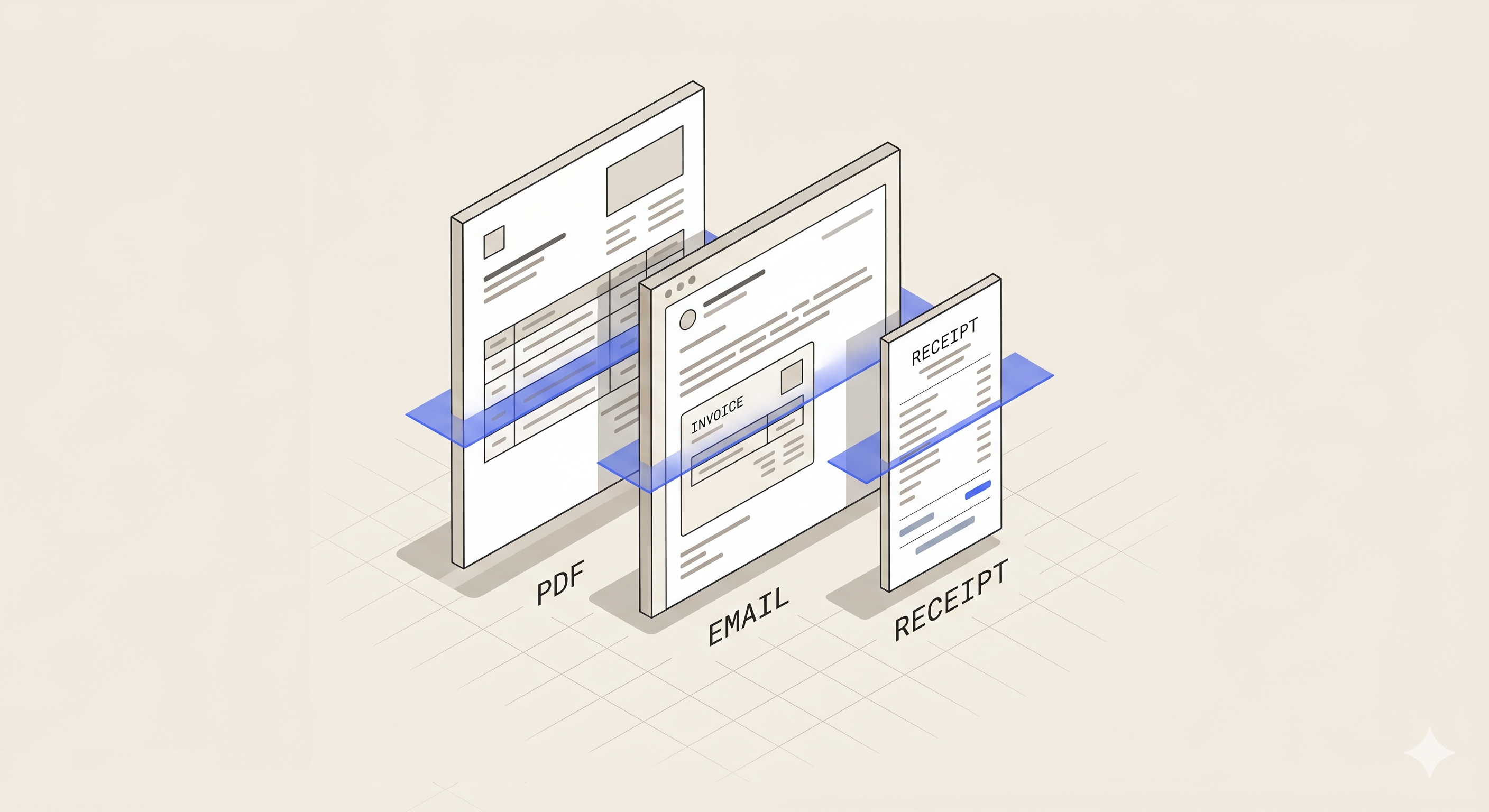
Ingest, match, code, and post every invoice, straight through to your ERP.
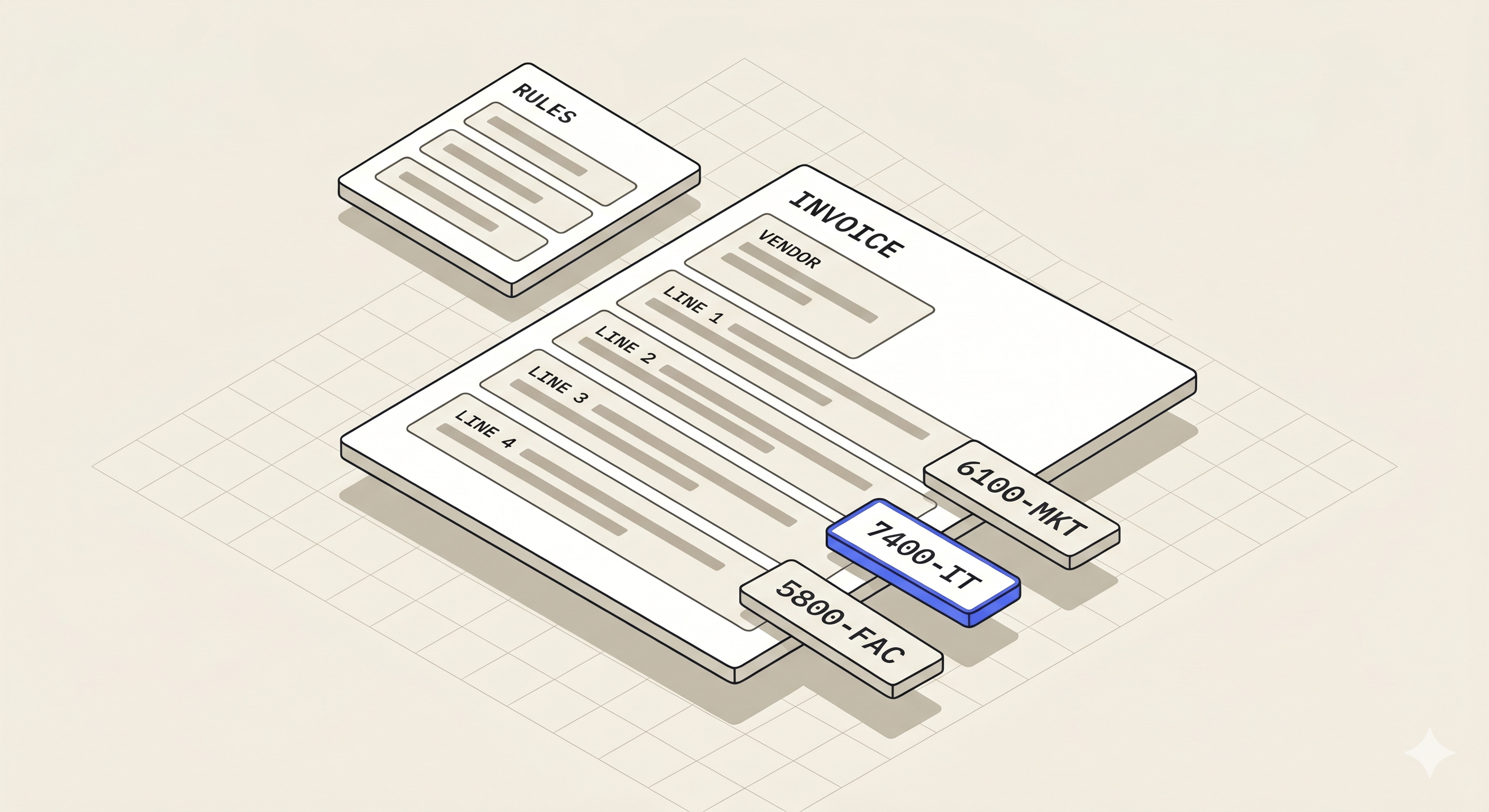
Match incoming payments to open invoices and post cash receipts automatically.
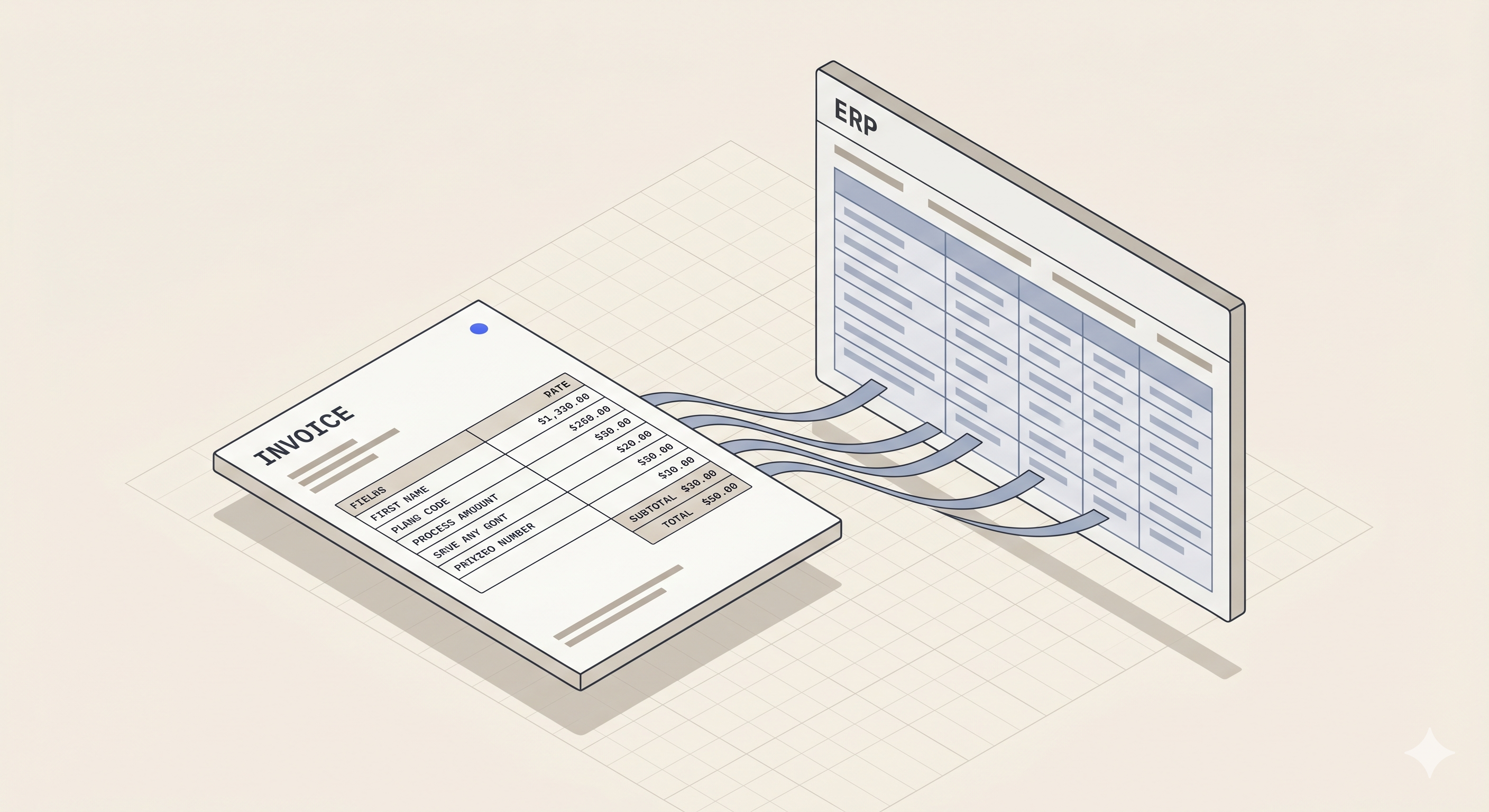
Reconcile accounts, draft accruals, and run flux analysis to close in days.
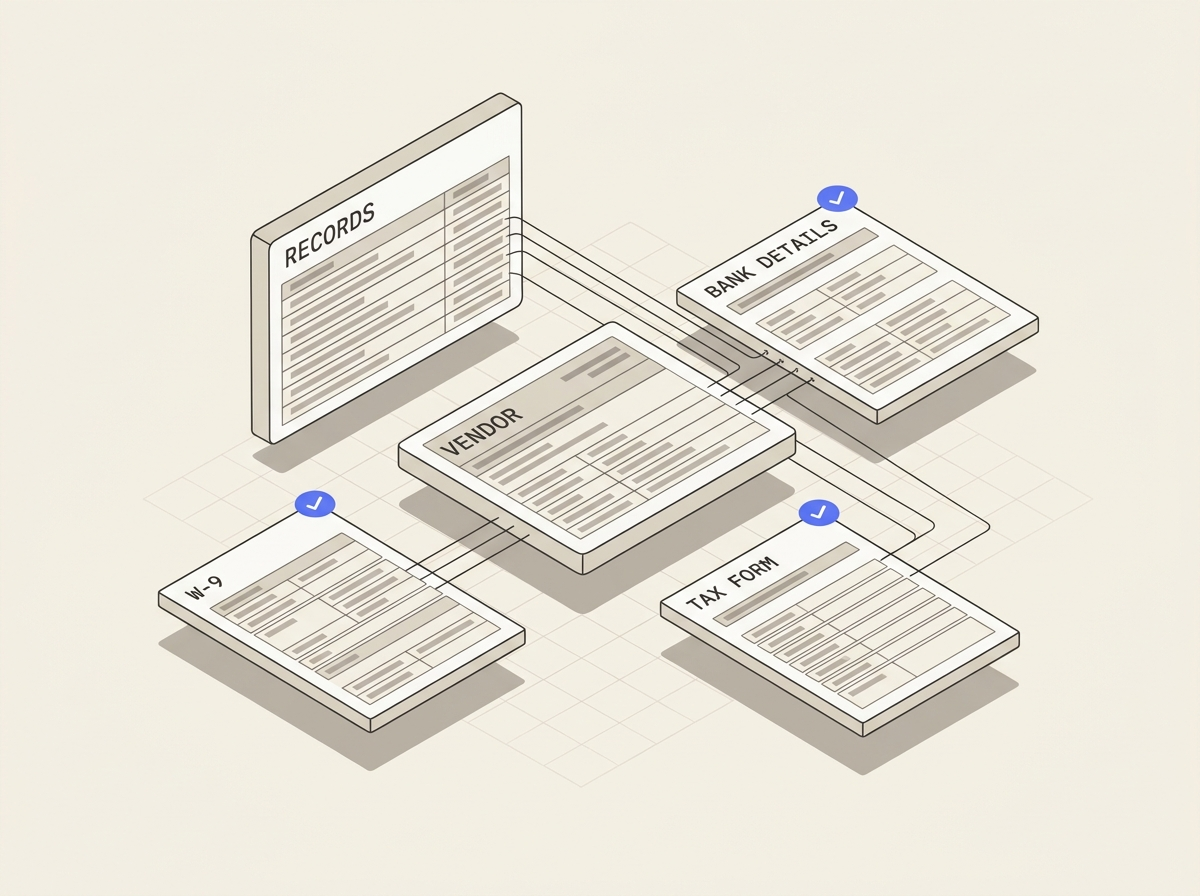
Collect, verify, screen, and activate new vendors in your ERP automatically.
FAQ
Frequently asked questions
Bank statement PDFs (with or without watermarks), bank API feeds, payment processor exports (Stripe, PayPal, Adyen), payment gateway logs, and your ERP general ledger. Custom sources via webhook or REST.
See it run on your statements, with your actual data.
Talk to us about building a reconciliation agent. Or start free. No credit card.